
A sore shoulder that keeps you awake, knee pain on the stairs, or a back injury that has not fully settled can change the way you work, exercise, and enjoy time with family. StemWave therapy patients receive at Riverbend Family Chiropractic is a non-surgical option designed to support the body’s natural healing response while helping reduce pain and improve movement.
StemWave Therapy is not a replacement for a thorough exam or a one-size-fits-all answer for every condition. It is one tool that may be used alongside chiropractic care, rehabilitative exercises, soft-tissue treatment, and other conservative services when those approaches fit your needs and goals.
What Is StemWave Therapy?
StemWave therapy uses acoustic waves, sometimes called sound waves, delivered through a handheld device to targeted areas of the body. These waves are intended to stimulate activity in irritated or injured tissue. The treatment is commonly considered for musculoskeletal concerns involving muscles, tendons, ligaments, joints, and areas affected by chronic strain.
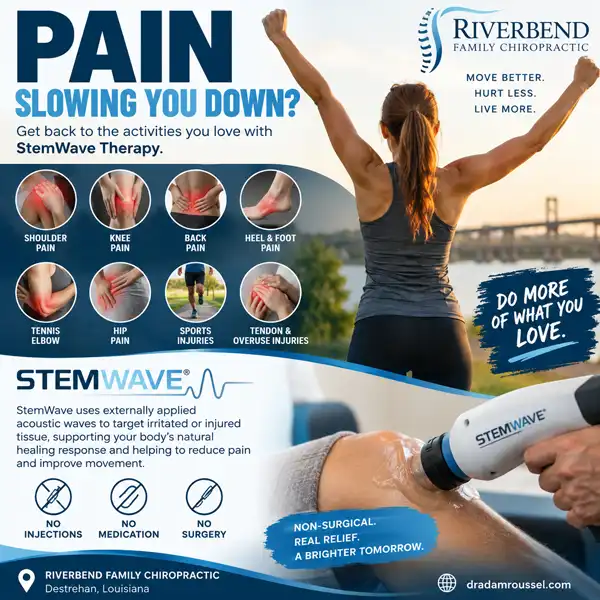
The name can be confusing. StemWave therapy does not involve injecting stem cells, surgery, or medication. Instead, it uses externally applied acoustic wave technology. The goal is to encourage the body’s own healing processes and improve the environment around the painful tissue.
During treatment, the provider applies gel to the treatment area and moves the device over specific points. Many patients describe a tapping or pulsing sensation. Sensitivity can vary depending on the area being treated and how irritated the tissue is, but settings can be adjusted with patient comfort in mind.
When StemWave Therapy in Destrehan May Be Considered
Pain has many causes. A runner’s heel pain, a warehouse worker’s shoulder strain, and a parent’s long-standing low back stiffness may all feel limiting, but they should not automatically receive the same treatment. A proper evaluation helps determine whether StemWave may be appropriate and whether another service should take priority.
StemWave may be considered as part of care for conditions such as persistent joint discomfort, tendon-related pain, overuse injuries, muscle tightness, heel pain, tennis elbow, shoulder pain, knee pain, hip discomfort, and certain neck or back complaints. It can also be useful for active people who are working to return to training after an injury, as well as adults whose pain has gradually reduced their daily mobility.
The best candidates are not simply people with the most pain. They are patients whose examination, health history, and functional goals suggest that conservative, tissue-focused care may be beneficial. If diagnostic spine X-rays, orthopedic testing, or referral for additional medical evaluation is needed, those steps should come first.
Acute Pain and Chronic Pain Can Need Different Plans
A recent injury may require protection, gentle movement, and careful assessment before more active therapies are added. Chronic pain often has a different pattern. The original injury may be old, but stiffness, altered movement, weakness, or repeated strain can keep the problem going.
That is why treatment plans should be personalized. Some patients may receive StemWave therapy early in their care plan. Others may benefit more after pain is better controlled through chiropractic adjustments, decompression, manual therapy, or therapeutic exercise. The timing depends on the diagnosis, the tissue involved, and how your body responds.
What to Expect at Your Visit
Your first visit should begin with a conversation, not a device. Dr. Adam Roussel reviews your symptoms, health history, daily demands, prior injuries, and goals for care. An exam can identify movement restrictions, areas of tenderness, joint dysfunction, and signs that a condition needs a different approach.
If StemWave therapy is a good fit, treatment is usually performed in the office and does not require downtime. You can generally return to normal daily activities afterward, although your care team may recommend temporary changes to workouts, lifting, or repetitive tasks based on your condition.
A session may be brief, but effective care is about more than the minutes spent receiving a treatment. Your plan may include guidance on movement, posture, activity modification, hydration, home exercises, or ways to reduce the repeated stress that contributed to the problem. These steps help turn short-term pain relief into meaningful functional progress.
Many patients ask how many sessions they will need. There is no honest single answer. It depends on the location and duration of the problem, the severity of tissue irritation, your overall health, work or sports demands, and whether you can address contributing movement habits. Some people notice a change quickly, while others need a series of visits before evaluating progress.
Why a Multimodal Approach Matters
Technology can be helpful, but it works best when it is part of a clear clinical strategy. If a shoulder hurts because of restricted neck movement, poor shoulder mechanics, and repetitive overhead work, treating only the sore spot may not fully solve the problem. The same is true for knee pain connected to hip weakness or low back pain influenced by poor lifting mechanics.
Riverbend Family Chiropractic combines hands-on chiropractic care with supportive therapies when appropriate. Depending on your needs, your treatment plan may include spinal or extremity adjustments, myofascial release, dry needling, deep tissue laser therapy, massage therapy, physiotherapy, or spinal decompression. The purpose is not to use every service. It is to choose the right combination for your condition and comfort level.
This approach is particularly valuable for patients recovering from auto accidents, workplace injuries, or sports-related problems. Pain can spread beyond the first area that was injured. Restoring motion, improving strength, and helping the body move more normally can be just as important as calming the painful area.
Safety, Comfort, and Realistic Expectations
Non-surgical does not mean that every treatment is right for every person. Your provider should review your medical history and identify any reasons to modify care or choose another option. Tell your care team about pregnancy, implanted devices, blood-thinning medication, a history of cancer, circulation concerns, recent surgery, fractures, infections, or changes in sensation.
Mild soreness or temporary tenderness after treatment can occur, especially when an area has been painful for a long time. That does not necessarily mean the treatment is harmful, but persistent or worsening symptoms should be discussed promptly. Your response guides the plan.
StemWave therapy should also be viewed with realistic expectations. It may help reduce pain and support better mobility for appropriate patients, but it does not guarantee a cure. Lasting improvement often requires participation outside the office: following activity recommendations, completing prescribed exercises, improving sleep and recovery habits, and returning for reassessment when needed.
Choosing Care for Pain That Is Holding You Back
If pain is keeping you from work, family activities, exercise, or a full night of sleep, you do not have to decide on a treatment alone. A focused examination can help clarify whether the issue appears to be related to the spine, joints, muscles, tendons, or a combination of factors.
For Destrehan families and River Parishes residents, the right first step is a personalized evaluation that listens to what you are feeling and looks at how you are moving. From there, a conservative plan can be built around relief, mobility, recovery, and long-term health.
Pain may have become part of your routine, but it does not have to set the limits for what you do next. A thoughtful assessment can help you understand your options and take a comfortable, practical step toward moving better.